
Opening and Clearance Checks
The contractor measures the opening and verifies that the framing, jambs, header, ceiling, and floor can support the selected system.
Serving Omaha, Nebraska & surrounding areas
Calls answered around the clock
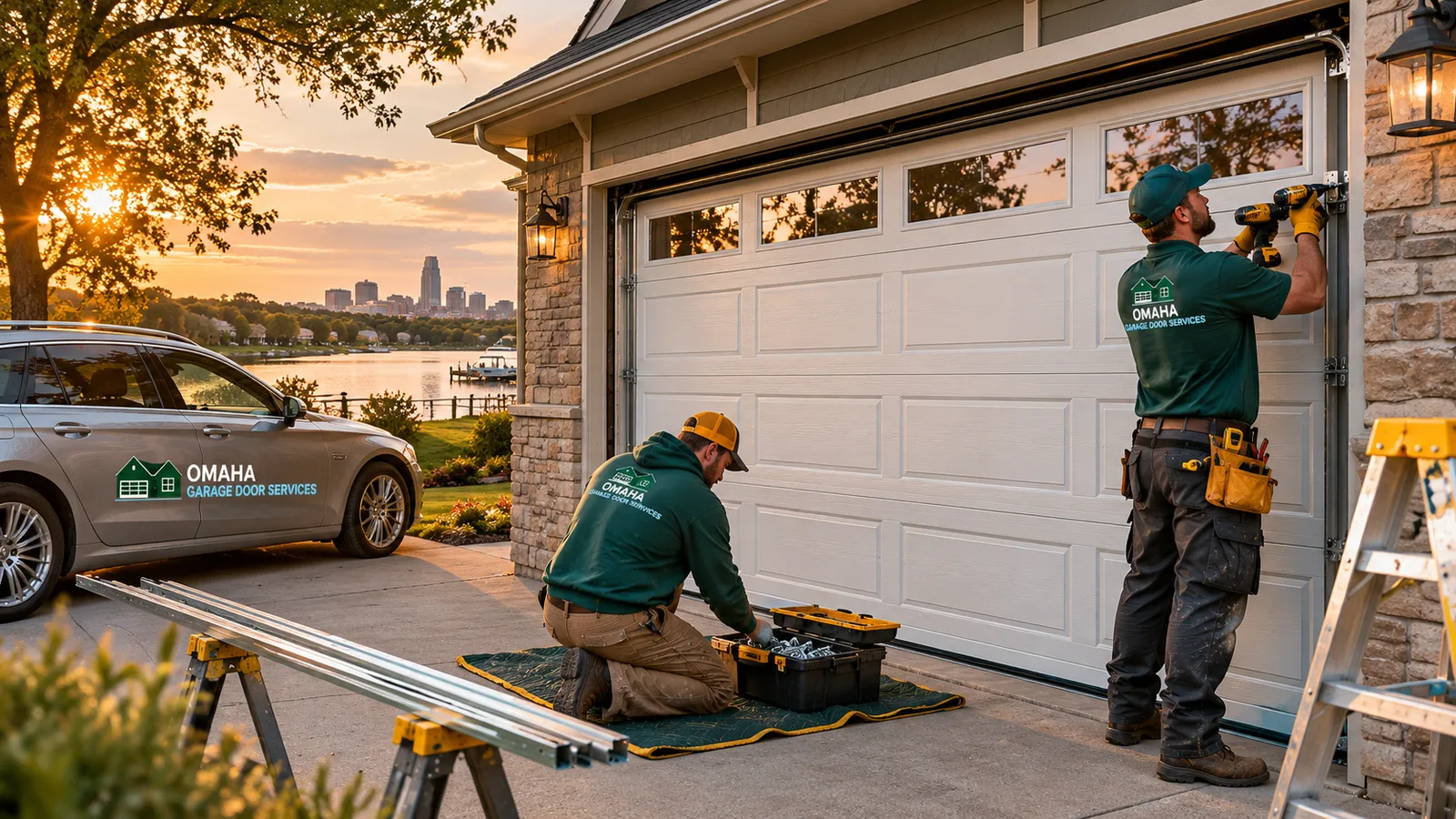
One call connects you directly with a local garage door contractor who serves your area.
A garage door install Omaha homeowners can rely on starts with accurate measurements and a close look at the entire opening. The contractor should measure the finished width and height, side room beside the opening, headroom over it, and backroom along the ceiling. Those dimensions determine which door, track configuration, spring system, and opener arrangement will fit.
The installer also checks the jambs, header, floor, framing, ceiling clearance, and mounting points. An opening that is out of square can leave uneven gaps at the weather seal or cause the rollers to bind. Damaged wood around the opening may need attention before the tracks and brackets can be secured.
Omaha's cold winters, hot summers, wind, hail, and freeze-thaw cycles make panel durability, insulation, perimeter seals, and corrosion resistance practical considerations. Attached garages often benefit from insulated steel doors because the insulation limits heat transfer through a large exterior opening. The contractor can explain available polystyrene and polyurethane insulation systems, panel construction, glazing, and weather seals.
We connect callers with home garage door service contractors across Omaha who handle residential installation work. You speak with the contractor directly, discuss the opening and door options, receive the quote from that contractor, and decide whether to proceed.
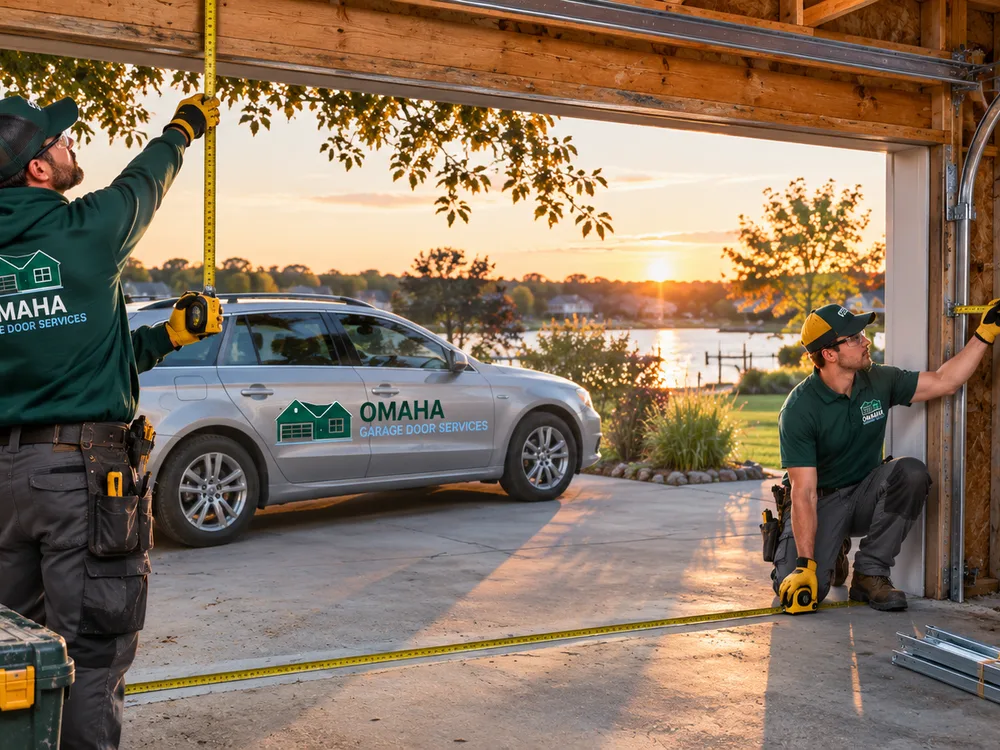
The door, tracks, counterbalance hardware, opener, and weather seals need to work as one complete system.
The contractor measures the opening and verifies that the framing, jambs, header, ceiling, and floor can support the selected system.
Common choices include raised-panel or flush steel doors, insulated sandwich construction, window sections, and finishes suited to the home's exterior.
The installer fits vertical and horizontal tracks, rollers, hinges, cables, drums, and either torsion or extension springs as specified for the door.
If an opener is included, the contractor confirms door balance, ceiling mounting, travel limits, force settings, photo-eye alignment, and manual release operation.
A bottom seal and perimeter stop molding help close gaps where wind-driven rain, snow, dust, and cold air can enter around the door.
One call puts you in direct contact with a contractor who handles garage door installation in Omaha and the surrounding area.
Enter your ZIP code and you are connected directly with a local garage door contractor who serves that area. Calls are answered around the clock.
The contractor discusses the existing opening, door size, panel material, insulation, windows, track layout, spring system, opener compatibility, and access to the garage.
The contractor provides the quote and explains the selected door, included components, removal arrangements, work sequence, and any warranty terms. You decide whether to move forward.
The old assembly is removed when replacement is part of the job. The installer then fits the sections, hardware, tracks, spring components, cables, and seals before balancing the door.
The installer checks smooth manual travel, track alignment, spring balance, lock operation, opener travel, safety reversal, photo eyes, and perimeter contact.
Stop making separate calls. One call connects you with a local contractor who can discuss your Omaha garage door installation directly.
CALL NOW: +1 531 201 2667
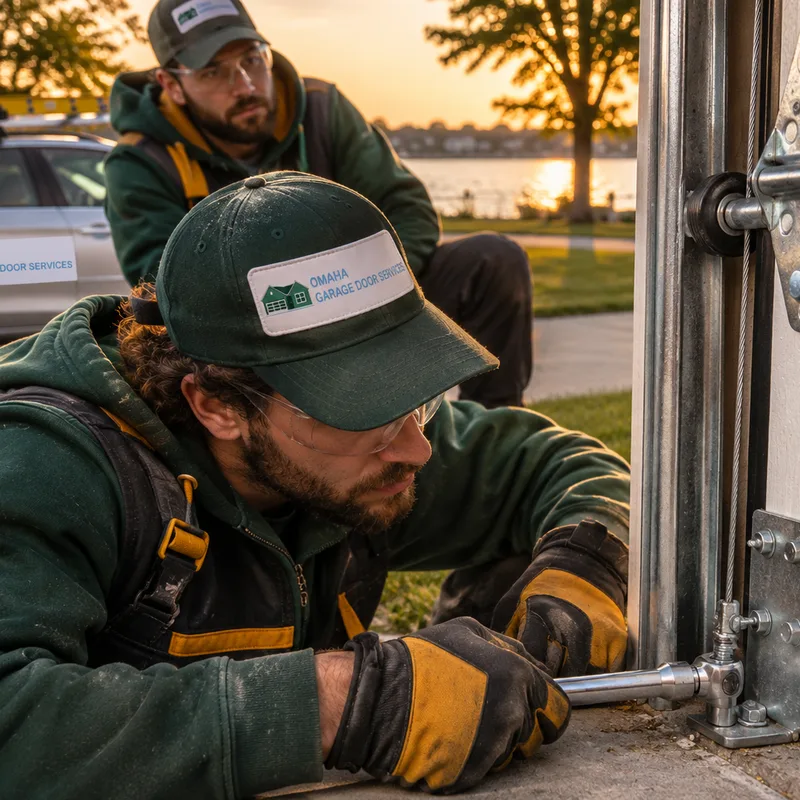
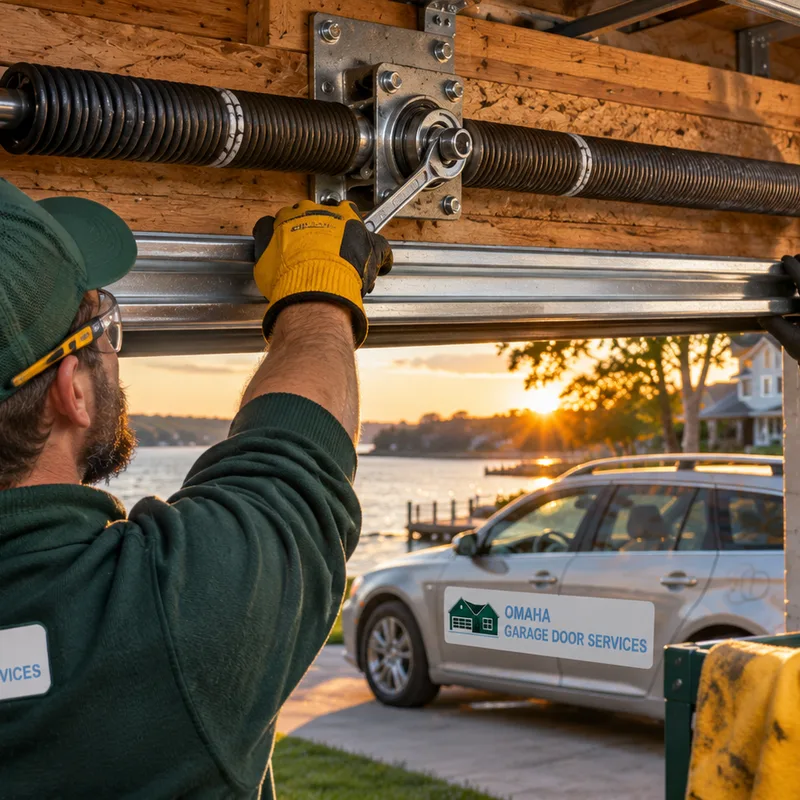
The contractor should inspect the tracks, springs, cables, rollers, hinges, opener, and framing before recommending which components can remain. A new door may have different weight, hardware, or track requirements, so compatibility matters more than appearance alone.
An insulated door can reduce heat transfer through the garage opening and stiffen the door sections. That can be useful for an attached garage or a space used as a workshop during Nebraska's temperature swings. Ask the contractor to explain the door's construction and insulation value rather than judging by panel thickness alone.
An existing opener may remain if it is compatible with the new door and operates correctly after the door is balanced. The contractor should assess the opener's mounting, rail length, lifting arrangement, travel limits, safety reversal, photo eyes, and manual release.
The contractor's quote should identify the door model or construction, size, finish, insulation, window design, track and spring system, seals, hardware, opener work, removal arrangements, and warranty terms. Ask which framing or electrical changes are included if the opening needs modification.
The installer prepares the opening, removes the existing assembly when included, installs the tracks and door sections, sets up the spring and cable system, and adds the weather seals. The door is then balanced and tested by hand before the opener is connected or adjusted.
The contractor should verify opening size, headroom, side room, backroom, floor level, jamb condition, header support, ceiling obstructions, and opener clearance. For an Omaha garage exposed to winter weather, the contractor should also assess the bottom seal contact and gaps around the perimeter.
Many door designs offer window sections in several shapes, glass types, and positions. The contractor can explain how glazing affects privacy, daylight, panel weight, insulation, and the exterior appearance of the home.
Pick up the phone and connect directly with a local garage door contractor who serves Omaha and the surrounding area. The contractor provides the quote, answers installation questions, and lets you decide what happens next.