
Door and Hardware Check
The installer checks whether the door moves smoothly by hand and looks at the springs, rollers, hinges, tracks, top section, and reinforcement bracket. Existing door problems may need attention before motor installation.
Serving Omaha, Nebraska & surrounding areas
Calls answered around the clock
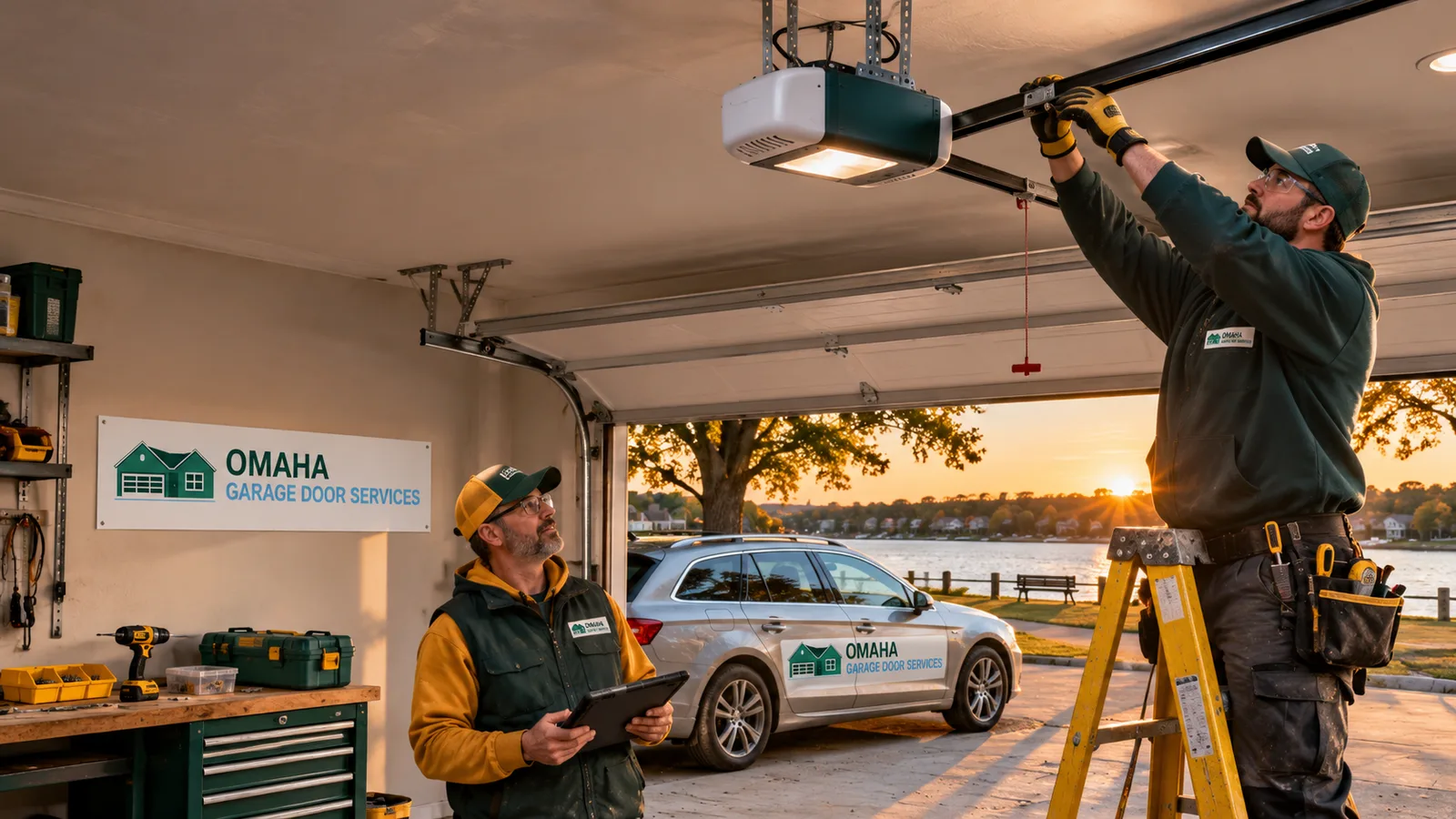
One call connects you directly with a local contractor who installs garage door openers in the Omaha area.
Garage door opener installation in Omaha is more than attaching a motor to the ceiling. The installer first checks the door's balance, travel, track alignment, spring condition, mounting points, and available electrical receptacle. An opener is designed to move a balanced door. It should not compensate for worn rollers, binding tracks, or a door that is unusually heavy to lift by hand.
The contractor can help compare belt-drive, chain-drive, and wall-mount units based on the garage layout and the homeowner's priorities. Belt drives are commonly chosen when reduced operating noise matters, particularly with living space beside or over the garage. Chain drives use a metal chain and are known for straightforward operation. A wall-mount opener attaches beside the torsion shaft, which can leave the ceiling area open, but the door and spring system must be compatible.
Omaha's cold winters and hot summers expose garage equipment to wide temperature changes. A contractor may account for thickened roller lubricant, stiff perimeter seals, changing door resistance, and battery performance when inspecting the setup. In older central Omaha garages, limited headroom or nonstandard framing can also affect rail placement and ceiling supports. Newer attached garages in west Omaha may have taller doors, finished ceilings, or rooms over the garage where opener noise and vibration deserve extra attention.
We connect callers with home garage door service companies across Omaha, NE that handle opener installation. You speak with the contractor directly, receive the quote from that contractor, and decide whether to proceed.
A complete setup considers the door, opener, mounting, controls, travel, and safety systems together.
The installer checks whether the door moves smoothly by hand and looks at the springs, rollers, hinges, tracks, top section, and reinforcement bracket. Existing door problems may need attention before motor installation.
Door height, weight, construction, ceiling clearance, torsion-shaft access, and nearby living space influence the choice between chain-drive, belt-drive, and wall-mount equipment.
The rail must be centered on the door, and the motor head needs secure support from suitable framing. A rigid installation helps limit movement and vibration during operation.
Open and close limits are adjusted so the door reaches the floor without excessive pressure and opens to the intended height. Force settings are then set for normal door travel.
The installer aligns the photoelectric sensors near the bottom of the tracks and tests the opener's reversal response. These checks confirm that the installed safety systems react as intended.
Wall controls, handheld remotes, wireless keypads, vehicle controls, and compatible app functions can be paired and demonstrated after installation.
You are connected directly with a local garage door contractor who serves that area. Calls are answered around the clock.
You talk with the contractor about the existing door, garage layout, current equipment, preferred controls, and whether an old opener needs to be removed. The contractor can explain suitable equipment and provide the quote.
Before installation, the contractor checks door balance, spring condition, track movement, headroom, framing, power access, and the attachment point on the top door section.
The contractor mounts the equipment, connects the door arm and controls, adjusts travel and force, aligns the safety sensors, pairs the selected accessories, and tests full operation.
The contractor can demonstrate manual release, control functions, routine care, and any connected access tools. Ask about equipment coverage and workmanship terms before approving the job.
Skip the search through multiple listings. One call connects you with a local contractor who handles garage door opener installation, and you decide what happens after speaking directly with that contractor.
CALL NOW: +1 531 201 2667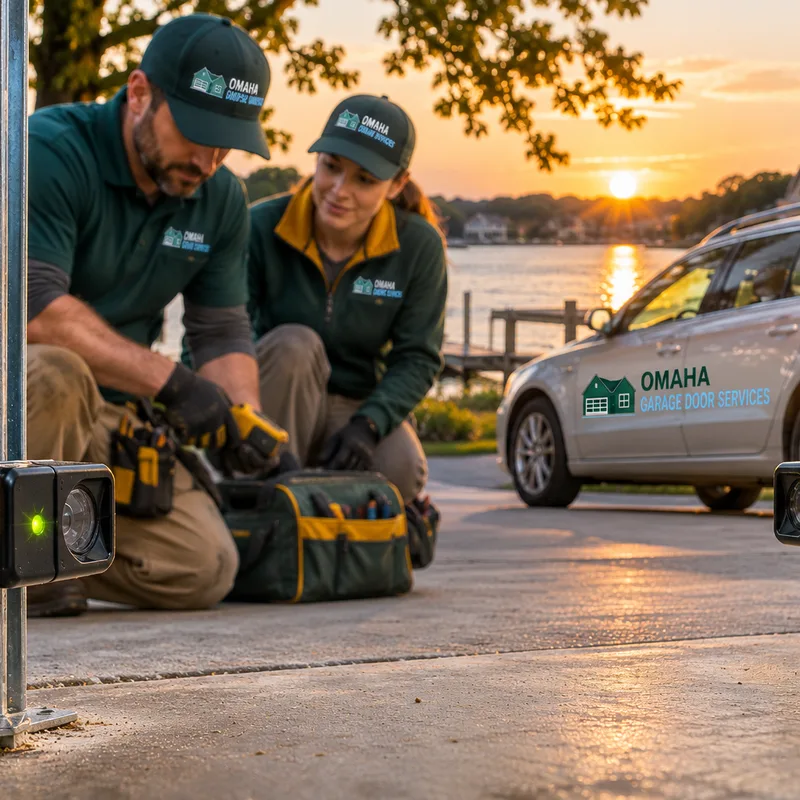
The decision depends on the failed part, the condition and age of the equipment, safety-system compatibility, and the availability of replacement components. A contractor can inspect the opener and explain whether replacing a control board, gear assembly, sensor, or remote is practical compared with installing a new unit. You receive the options and quote directly from the contractor.
An opener can be fitted only when the door is mechanically sound, properly balanced, and compatible with the chosen unit. Door height, spring system, top-section strength, low-headroom hardware, high-lift tracks, and torsion-shaft access can change the equipment or mounting method. The installer should confirm these conditions before installation.
A belt-drive opener is often considered when operating noise and vibration matter near living space. Installation quality also affects sound because loose supports, worn rollers, and a poorly balanced door can make any opener seem louder. A contractor can compare drive types after inspecting the door and framing.
A standard opener can be disconnected with its manual release so a balanced door can be operated by hand. Some models also accept or include battery backup, which can power limited door cycles during an outage. Ask the contractor which compatible models offer that function and how the battery is maintained.
Reuse depends on the opener brand, model, radio frequency, and security protocol. Older controls may not communicate with newer rolling-code equipment. The contractor can identify compatible devices and pair the controls selected for the installation.
The door should travel smoothly, stop at the correct open and closed positions, reverse when the safety system is activated, and release manually as designed. The installer should also demonstrate the wall control, remotes, keypad, manual release, and any compatible app functions. Keep the floor clear around the sensor beam and test the safety functions according to the equipment manufacturer's instructions.
One call connects you directly with a local Omaha-area contractor who installs garage door openers. Discuss the equipment and quote with the contractor, then choose whether to move forward.